

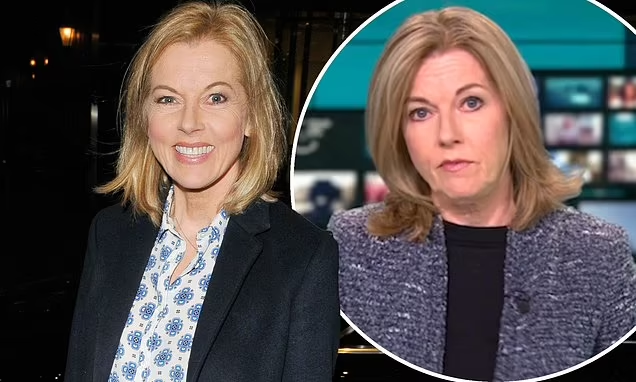
Introduction to Mary Nightingale and Public Curiosity About Her Health
Mary Nightingale is one of the most recognizable faces in British journalism, best known for her long-standing role as a presenter on ITV Evening News. Over the years, she has built a reputation for professionalism, composure, and credibility. Because of this high-profile presence, it’s not unusual for the public to develop a deep interest in both her career and personal life. Among the most frequently searched topics is the phrase “Mary Nightingale illness,” which reflects growing curiosity about her health.
Public figures often experience a level of scrutiny that extends far beyond their professional roles. In the case of Mary Nightingale, even subtle changes in appearance or brief absences from broadcasting can trigger speculation. Social media, online forums, and gossip websites tend to amplify such concerns, sometimes without credible evidence. This creates a cycle where curiosity turns into rumor, and rumor becomes widely accepted as fact.
It is important to approach topics like this with care and responsibility. Health is a deeply personal matter, and unless confirmed by the individual or reliable sources, assumptions can be misleading. In Nightingale’s case, there has been no widely verified or officially confirmed serious illness, despite ongoing speculation.
This article aims to unpack the topic in Mary Nightingale Illness a thoughtful and informed way. Rather than fueling rumors, it focuses on separating fact from fiction, understanding why such speculation arises, and highlighting the broader conversation around privacy, media ethics, and public curiosity.
Who Is Mary Nightingale? A Look at Her Career and Public Image
Mary Nightingale has enjoyed a long and successful career in broadcasting, becoming one of the most respected news presenters in the UK. Her journey into journalism began with academic training and early work in media, eventually leading her to prominent roles on television. Over time, she established herself as a trusted voice in news reporting.
Her association with ITV has been a defining aspect of her career. As a lead presenter, she has covered major global and national events, earning recognition for her calm delivery and authoritative presence. Viewers often associate her with reliability, which makes her a staple in British households.
Beyond her professional achievements, Nightingale maintains a relatively private personal life. Unlike many modern celebrities, she has not actively cultivated a social media persona, which adds to her mystique. This balance between public visibility and Mary Nightingale Illness personal privacy has largely worked in her favor.
However, this same privacy can also lead to speculation. When there is limited information available, audiences may fill in the gaps with assumptions. This is particularly true when it comes to health-related topics, where even minor changes can spark concern among viewers.
The Origin of “Mary Nightingale Illness” Searches
The rise in searches related to Mary Nightingale’s health did not emerge from a single confirmed event. Instead, it appears to be the result of gradual speculation fueled by audience observations and online discussions. In many cases, such searches are triggered by something as simple as a temporary absence from a broadcast.
Television presenters, especially those in daily or weekly roles, become part of viewers’ routines. When someone like Nightingale is suddenly not on screen, audiences naturally notice. Without an official explanation, curiosity can quickly turn into speculation about possible health issues.
Another contributing factor is the nature of digital media. Search engines and social platforms tend to amplify trending topics, regardless of their accuracy. Once a phrase like “Mary Nightingale illness” gains traction, it continues to circulate, even if there is no verified information behind it.
It’s also worth noting that public Mary Nightingale Illness interest in celebrity health is not new. Historically, audiences have always been curious about the well-being of public figures. What has changed is the speed and scale at which information—and misinformation—spreads.
Addressing the Facts: Is There Any Confirmed Illness?
As of now, there is no confirmed or widely reported serious illness associated with Mary Nightingale. She has continued to appear on television and fulfill her professional responsibilities, which suggests that any concerns about her health may be unfounded or exaggerated.
It is essential to rely on credible sources when discussing health-related matters. Reputable news outlets and official statements are the most reliable ways to verify such information. In Nightingale’s case, there have been no major announcements indicating a significant health issue.
That said, like any individual, she may experience routine health fluctuations or take time off when needed. This is a normal part of life and does not necessarily indicate a serious condition. Unfortunately, in the context of public figures, even ordinary situations can be misinterpreted.
The lack of confirmed Mary Nightingale Illness information should encourage a more cautious approach. Instead of assuming the worst, it is more reasonable to acknowledge that not all speculation is grounded in reality.
Why Do Health Rumors About Public Figures Spread So Easily?
The spread of health rumors about public figures is a complex phenomenon influenced by several factors. One of the primary drivers is the human tendency toward curiosity. People naturally want to know more about those they see regularly, especially when those individuals play a role in delivering important information, as Nightingale does.
Another factor is the role of social media. Platforms allow information to be shared instantly, often without verification. A single post or comment can quickly gain traction, leading others to repeat or embellish the claim. Over time, this creates a narrative that may have little connection to the truth.
There is also an emotional component. Viewers who have watched Nightingale for years may feel a sense of familiarity or even personal connection. This can lead to genuine concern when they perceive something unusual, even if there is no real cause for alarm.
Finally, the lack of official Mary Nightingale Illness information can contribute to speculation. When there is no clear statement, people may assume that something is being hidden. In reality, it often simply reflects a desire for privacy.
The Importance of Privacy and Respect in Health Discussions
Health is a deeply personal matter, and this remains true regardless of a person’s public profile. While public figures like Mary Nightingale are accustomed to a certain level of attention, they are still entitled to privacy, especially when it comes to medical issues.
Respecting this boundary is crucial. Speculating about someone’s health without evidence can be intrusive and potentially harmful. It can also contribute to unnecessary anxiety among fans and viewers.
Media organizations and audiences alike have a responsibility to approach such topics with sensitivity. This means avoiding the spread of unverified information and focusing instead on confirmed facts. In doing so, we create a more respectful and accurate public discourse.
In Nightingale’s case, maintaining this respect is particularly important given her role as a trusted news presenter. Just as she delivers Mary Nightingale Illness information with care and accuracy, it is only fair that discussions about her are held to a similar standard.
Mary Nightingale’s Professional Resilience and Consistency
One of the most notable aspects of Mary Nightingale’s career is her consistency. Over the years, she has remained a steady presence on television, delivering news with professionalism and clarity. This reliability has earned her the trust of millions of viewers.
Even in the face of occasional speculation, she has continued to focus on her work. This resilience is a testament to her dedication and commitment to journalism. It also serves as a reminder that public figures often navigate challenges without making them part of the public narrative.
Her ability to maintain composure and professionalism, regardless of external noise, is part of what sets her apart. It reinforces her Mary Nightingale Illness reputation as a credible and dependable broadcaster.
This consistency also provides reassurance to viewers. Seeing her regularly on screen is a clear indication that she remains active and engaged in her role.
The Role of Media Literacy in Understanding Celebrity Health News
In today’s digital age, media literacy is more important than ever. With so much information available, it can be challenging to distinguish between Leslie Knipfing credible news and speculation. This is particularly true when it comes to topics like celebrity health.
Understanding how to evaluate sources is a key part of media literacy. Reliable information typically comes from established news organizations, official statements, or direct communication from the individual involved. In contrast, rumors often originate from less credible platforms.
Applying this critical approach to searches like “Mary Nightingale illness” can help prevent the spread of misinformation. Instead of accepting claims at face value, it is important to ask questions and seek verification.
By adopting a more informed approach, audiences can contribute to a more accurate and respectful information environment.
Conclusion: Separating Curiosity from Reality
The topic of “Mary Nightingale illness” highlights the broader dynamics of public curiosity, media influence, and the spread of information. While it is natural for audiences to be interested in the well-being of familiar public figures, it is equally important to approach such topics with care and responsibility.
